 Talk to a Sage Intacct Expert
Design starts with the operating model
Nonprofit & Social Services
Grant and program reporting
Food & Related Industries
Margin is made, and lost, between the purchase order and the sale.
Producers, processors, distributors and food service operators move inventory that changes as it moves: received, transformed, shipped, adjusted and sold. Finance design decides where each cost lands and which system owns the detail.
Purchase, Receive, Produce / Distribute, Adjust, Sell, Margin
Where margin leaks from the loop.
Inventory moves through six stages. Choose a leak to see where it enters the loop, where its detail usually lives and how it should reach margin.
- 01Purchase
- 02Receive
- 03Produce / Distribute
- 04Adjust
- 05Sell
- 06Margin
Freight
Enters atPurchase, Receive, Sell
- Detail usually lives in
- Logistics, receiving and order systems
- How it should reach margin
- Decide whether inbound freight is part of the landed cost of inventory, and assign outbound freight to the customer and channel it served.
Rebates
Enters atPurchase, Sell
- Detail usually lives in
- Supplier and customer agreements, often kept in spreadsheets
- How it should reach margin
- Accrue rebates as they are earned, by supplier or customer, so margin is not overstated until year end.
Wastage and shrink
Enters atProduce / Distribute, Adjust
- Detail usually lives in
- Production or warehouse systems
- How it should reach margin
- Record adjustments with reason codes, so wastage is visible by site and product rather than buried in cost of sales.
Returns and credits
Enters atAdjust, Sell
- Detail usually lives in
- Order management and customer service
- How it should reach margin
- Tie each credit to the original sale, product and customer, so returns are reported where they happened.
Price and promotions
Enters atSell, Margin
- Detail usually lives in
- Pricing and trade promotion
- How it should reach margin
- Record promotional allowances against the customer and product they supported, not as a general discount.
Sage Intacct in this operating model
Purchasing, orders and margin in one financial flow.
Sage Intacct Purchasing and Order Entry manage buying and selling, with inventory valuation, rebates, freight and adjustments accounted for by site, product and customer. Production and traceability systems connect where the product is made; Sage Intacct turns it into true margin.
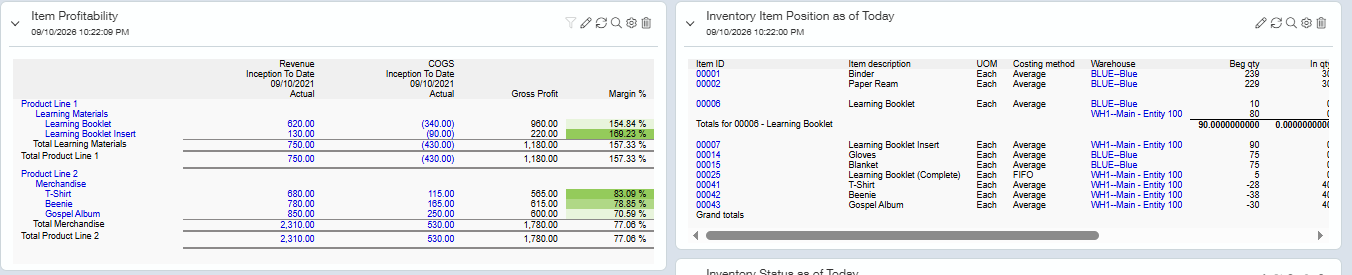
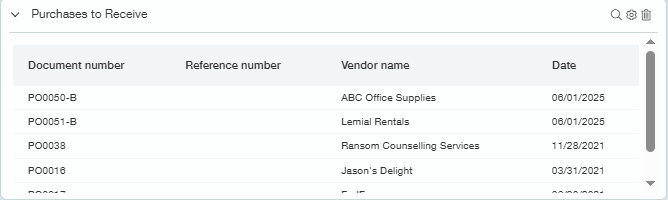
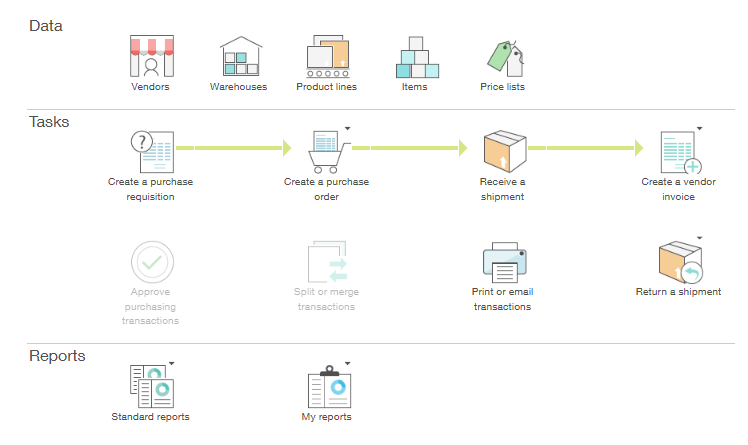
Actual Sage Intacct interface. Demo data shown. It can be customized for your organization.
How the solution fits together
- Configurable sequence
- Foundation, used throughout
- Cross-cutting capability
- Integration boundary
- Reporting and insight
Reporting and insight
Integrations can connect here, and at any point
Procure to pay
- 01Requisition or purchasing need
- 02Purchase order
- 03Receipt
- 04Vendor invoice and AP Automation
- 05Payment
Branches and loopsSupplier rebates accrue as they are earned; credits adjust the order.
Order to cash
- 01Customer order
- 02Fulfilment or shipment
- 03Invoice
- 04Returns, credits and allowances
- 05Cash collection
Branches and loopsReturns, short shipments and deductions loop back to the invoice.
Foundation, configured once and used throughout
- Purchasing and AP AutomationRequisitions, purchase orders, receipts and supplier invoices, matched before payment.
- Order EntryCustomer orders, fulfilment, invoicing, returns and credits.
- Inventory valuationCost of sales and inventory by site and product, from the operational system of record.
- Rebates, allowances and deductionsRebates, allowances, promotions and customer deductions accounted for against the customer and product.
- DimensionsSite, product, customer, channel and route on every transaction.
- Multi-entity and integrationsPlants, distribution entities and brands consolidated; production and warehouse systems connected.
How Biviti configures it
We decide which system owns inventory quantities and lots, configure purchasing and order flows, set the landed-cost, rebate and adjustment rules, and design dimensions so margin is reported by customer, product and channel after every deduction.
Explore Sage IntacctOperations own the inventory detail. Sage Intacct owns the margin.
Lots, recipes, yields and traceability live in the production, warehouse or inventory system that runs the operation. Sage Intacct controls purchasing, orders and the financial workflow, applies the site, product and customer structure, automates approvals and close where appropriate, reconciles valuation and movements, and turns them into margin reporting. Specialized lot, traceability and production functions stay in the operational system unless a current, verified capability says otherwise.
Operational systems capture
- Lots and traceability
- Recipes, yields and production
- Stock by location and status
Sage Intacct controls
- Purchasing, receipts and supplier invoices
- Customer orders, invoices and credits
- Inventory valuation and cost of sales by product and customer
- Adjustments with reason codes
Production, distribution or service.
The loop is shared. The weight of each stage is not.
Producers and processors
Recipes, yields, co-products and by-products. Standard cost against actual, and variance by line and product.
Distributors
Landed cost, freight, supplier rebates and customer allowances. Margin by customer, product and route.
Food service
Purchasing across sites, menu cost, wastage and labour by location.
- Which system is the source of truth for inventory quantities and lots?
- Is inbound freight part of inventory cost today?
- How are supplier rebates and customer allowances accrued?
- Can you report margin by customer, product and channel after freight and rebates?
- How are wastage and adjustments recorded, and with what reasons?
See your true margin, product by product.
Talk to a Sage Intacct specialist about your inventory, freight, rebates and operating systems.