 Talk to a Sage Intacct Expert
Design starts with the operating model
Nonprofit & Social Services
Grant and program reporting
Retail & Consumer
Every sale has to reach the bank. The ledger has to know why some did not.
Retail and consumer businesses sell through stores, online and marketplaces, each settling on its own schedule with its own fees and returns. The design decides how that volume becomes clean, reconciled margin reporting.
Sale, Settlement, Fee / Return, Bank, Ledger, Margin
From the sale to the margin, one channel at a time.
Choose a channel, then follow a day of sales. The waterfall shows how gross sales shrink before they reach the bank, and why each channel needs its own reconciliation.
01SaleStores
The point of sale records items, tenders, taxes and discounts by store.
02SettlementStores
Card processors settle daily totals, usually a day or two later.
03Fee / ReturnStores
Card fees and cash differences need their own accounts.
04BankStores
Deposits must tie to store and processor totals.
05LedgerStores
Post daily summaries by store with tender detail, not every item.
06MarginStores
Margin by store and department, after shrink and markdowns.
01SaleOnline store
The ecommerce platform records orders, shipping and taxes, often before fulfilment.
02SettlementOnline store
Payment providers settle in batches that mix orders, refunds and fees.
03Fee / ReturnOnline store
Returns and refunds can arrive weeks after the sale.
04BankOnline store
One deposit can cover many orders across several days.
05LedgerOnline store
Post summaries by day and channel. The platform keeps the order detail.
06MarginOnline store
Margin after shipping, returns and payment fees.
01SaleMarketplace
The marketplace records the order. You see it through its reports.
02SettlementMarketplace
The marketplace pays out on its own schedule, net of fees and any reserves.
03Fee / ReturnMarketplace
Commissions, fulfilment, advertising and returns are deducted before payout.
04BankMarketplace
Payouts rarely match any single order total.
05LedgerMarketplace
Gross up each payout into sales, fees and returns, so margin is honest.
06MarginMarketplace
Margin after marketplace fees, which can change the answer completely.
Illustrative proportions, not benchmarks.
Sage Intacct in this operating model
Sales and purchasing run as two connected processes.
Sage Intacct Order Entry and Purchasing manage the order-to-cash and procure-to-pay flows, while dimensions report every store, channel and entity. Point of sale, ecommerce and marketplaces feed settlements that Sage Intacct accounts for, reconciles and turns into margin.
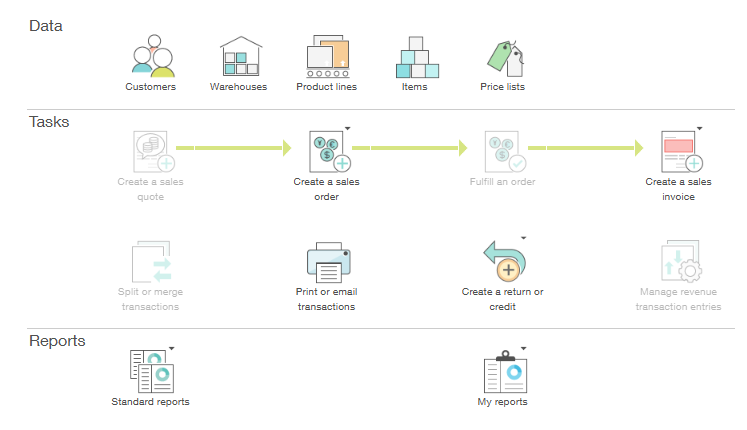
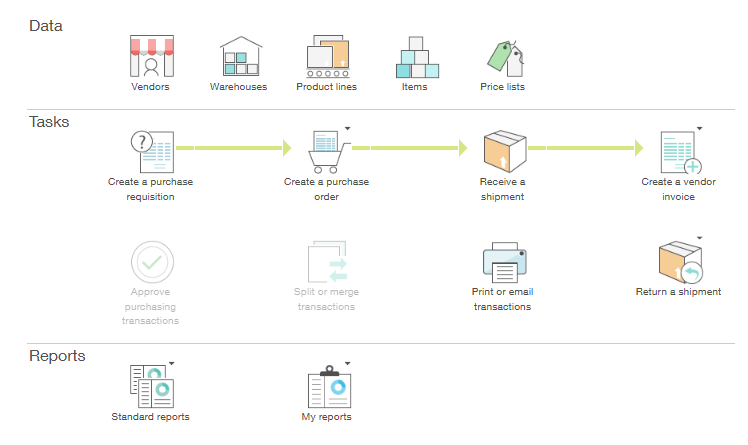
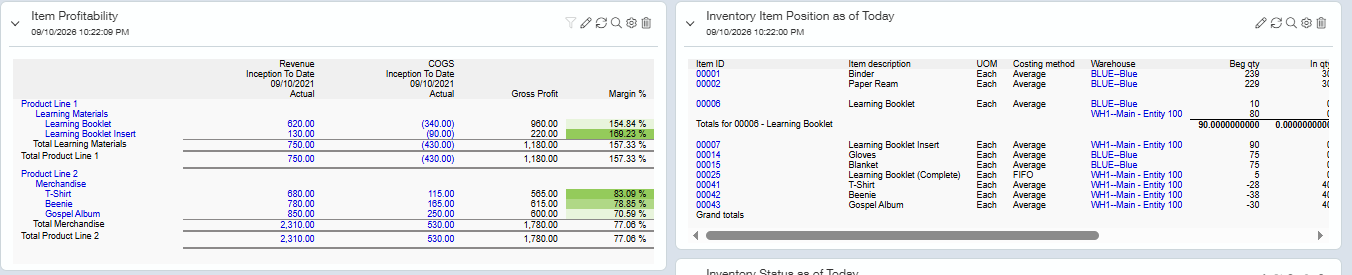
Actual Sage Intacct interface. Demo data shown. It can be customized for your organization.
How the solution fits together
- Configurable sequence
- Foundation, used throughout
- Cross-cutting capability
- Integration boundary
- Reporting and insight
Reporting and insight
Integrations can connect here, and at any point
Order to cash
- 01Channel, POS or ecommerce sale or order
- 02Fulfilment, return or adjustment
- 03Settlement or payment processor
- 04Revenue, tax and fee accounting
- 05Cash reconciliation
Branches and loopsReturns, refunds, chargebacks and marketplace adjustments loop back into settlement and revenue.
Procure to pay
- 01Requisition or purchasing need
- 02Purchase order if used
- 03Receipt
- 04Vendor invoice and AP Automation
- 05Approval
- 06Payment
Branches and loopsPartial receipts and supplier credits adjust the order.
Foundation, configured once and used throughout
- Order EntryConfigurable order-to-cash: quote where used, order, fulfilment, invoice, returns and credits.
- Purchasing and AP AutomationRequisitions, purchase orders, receipts and supplier invoices, matched before payment.
- Multi-location dimensionsStore, region, channel and entity on every transaction.
- Cash and reconciliationSettlements and deposits reconciled to the bank.
- TaxSales tax and GST/HST accounted for by jurisdiction.
- Close and dashboardsA faster close and margin dashboards by location and channel.
How Biviti configures it
We design the location and channel dimensions, decide the summary level each source sends, configure settlement accounting so marketplace payouts are grossed up, and connect inventory for cost of sales, then reconcile every deposit.
Explore Sage IntacctChannels capture the sale. Sage Intacct makes it reconcile.
Stores, online platforms and marketplaces own the item and order detail. Sage Intacct controls the financial workflow, applies the store, channel and entity structure, automates approvals and close where appropriate, reconciles every settlement and turns it into margin reporting. The design decides the summary level, the mapping and who resolves each exception.
| Source | Keeps | Sends to finance | Exception owner |
|---|---|---|---|
| Point of sale | Items, tenders, discounts, cashier activity | Daily sales, tax and tender totals by store | Store operations |
| Ecommerce platform | Orders, customers, shipping, refunds | Daily sales, refunds and tax by channel | Ecommerce team |
| Payment providers and marketplaces | Settlements, fees, reserves, payouts | Settlement reports, grossed up | Finance |
| Inventory or merchandising | Items, costs, stock by location | Inventory valuation and cost of sales | Merchandising with finance |
Beyond the settlement.
Margin by location and channel depends on purchasing, tax, labour and structure being right too.
- Purchasing and receiving
- Purchase orders, receipts and supplier invoices matched before payment, so cost and inventory agree.
- Sales tax
- Tax calculated at the point of sale, by jurisdiction, and reconciled to what is remitted.
- Payroll by location
- Store labour coded to location, so labour cost sits beside sales in the same report.
- Locations and entities
- Stores, regions, channels and legal entities as dimensions that report alone and together.
- How many channels settle into your bank accounts, and on what schedules?
- Who reconciles each deposit to its source, and how long does it take?
- Are marketplace payouts grossed up into sales, fees and returns?
- Which system owns item cost and inventory valuation?
- Can you report margin by location and channel after fees and returns?
Make every channel reconcile.
Talk to a Sage Intacct specialist, or assess how your finance processes run today.