 Talk to a Sage Intacct Expert
Design starts with the operating model
Nonprofit & Social Services
Grant and program reporting
Professional & Financial Services
Two operating models. One finance backbone.
Professional services firms earn through people, time and projects. Financial services organizations run on specialist platforms and control totals. Both need entities, dimensions, a disciplined close and reporting people trust.
A two-lens operating model
Switch the lens. The backbone stays.
Choose the model closest to yours. The operational side changes completely. The finance backbone in the middle does not, which is why firms that run both can share one design.
Where activity starts
Time, expenses and project tasks, in a professional services or time system, or in Sage Intacct projects.
What reaches finance
Approved time and expenses by project, employee and client.
What must reconcile
Unbilled time and work in progress to billing, and recognized revenue to project progress.
What leaders watch
Utilization, realization, project margin and unbilled work.
What to validate
Revenue recognition and billing arrangements: fixed fee, time and materials, milestones and retainers.
Where activity starts
Transactions in specialist platforms: lending, investment, insurance, payments or trading systems.
What reaches finance
Summaries or controlled detail by product, entity and day, with control totals.
What must reconcile
Platform balances and control totals to the general ledger, and activity between entities.
What leaders watch
Entity results, balances by product, exceptions and reconciliation status.
What to validate
Regulatory and specialist reporting, which may belong in the specialist platform rather than the general ledger.
Shared finance backbone
- Legal entities and intercompany
- Chart of accounts and dimensions
- Approvals and access
- Close and consolidation
- Management reporting
Professional services: from time to revenue.
Sage Intacct project accounting covers project costs, billing and revenue recognition. The design question is how time, projects and billing arrangements are structured so that work in progress and margin are always explainable.
- TimeRecorded against a project and task, by the person who did the work.
- ApprovalReviewed by the project lead before it can be billed.
- ProjectCost and unbilled value accumulate on the project.
- BillInvoiced under the arrangement: time and materials, fixed fee or milestone.
- RecognizeRevenue recognized as the work is performed, under the rules you agree.
Financial services: summary or detail?
Specialist platforms capture the transactions. Sage Intacct controls the accounting, applies the entity and dimension structure, checks control totals, reconciles each feed and turns it into entity and consolidated reporting. The design decides how much detail the ledger genuinely needs.
- Summary postings
- Daily totals by product and entity, with control totals and a clear route back to the platform detail.
- Transaction detail
- Individual transactions where audit, reconciliation or reporting genuinely need them.
- Exceptions
- A defined queue for postings that fail validation, with an owner and a deadline.
- Intercompany
- Activity between entities matched and eliminated, so consolidated results are clean.
- Which model do you run: people and projects, specialist platforms, or both?
- Where is time or transaction activity first recorded, and who owns that system?
- What level of detail does the general ledger genuinely need?
- Which reports reconcile work in progress, platform balances or intercompany activity today?
- Which regulatory or specialist reports must be validated before assuming where they are produced?
Sage Intacct in this operating model
From time and projects to revenue, and from platforms to one close.
For professional firms, Sage Intacct project accounting covers time, expenses, billing and revenue recognition. For financial services organizations, it gives entities, intercompany, control totals and consolidation a disciplined home. Choose the model below.
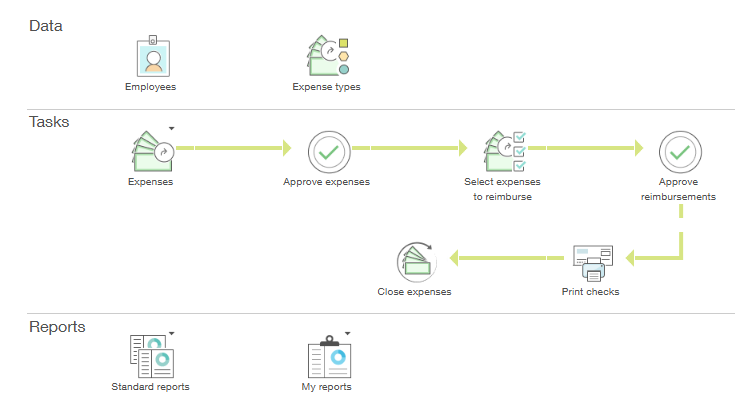
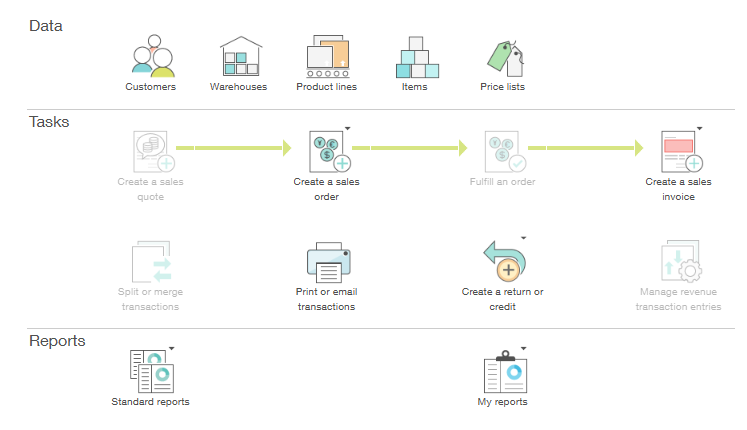

Actual Sage Intacct interface. Demo data shown. It can be customized for your organization.
How the solution fits together
- Configurable sequence
- Foundation, used throughout
- Cross-cutting capability
- Reporting and insight
Reporting and insight
Professional services: project to profit
- 01Opportunity, contract or project setup
- 02Time, expense and project activity
- 03Approval
- 04Billing
- 05Revenue recognition as applicable
- 06Collection
- 07Project profitability
Branches and loopsWrite-downs, change requests and retainers adjust billing and revenue.
Financial services: platforms into one ledger
- Specialist platforms feed summaries or detail
- Control totals and reconciliation
- General ledger and dimensions
- Intercompany and consolidation
- Close and reporting
Foundation, configured once and used throughout
- Project accountingProjects, tasks, budgets and profitability, with billable and non-billable costs.
- Time and expenseTime and expenses captured against projects and approved before billing.
- Billing and revenue recognitionTime and materials, fixed fee and milestone billing, with revenue recognized as the work is performed.
- Multi-entity and consolidationEntities, intercompany and consolidation as the architecture, not an afterthought.
- Integrations and APIsSpecialist platforms and CRM connect through the Sage Intacct API and Marketplace, with control totals and reconciliation.
- Close and dashboardsClose automation where it is available in your region, and role-based dashboards for partners, controllers and executives.
How Biviti configures it
We design the project and billing structure for firms, and the entity, control-total and reconciliation structure for financial services, on one shared chart and dimension model, so organizations that run both close once.
Explore Sage IntacctDesign for the model you actually run.
Talk to a Sage Intacct specialist about your projects, platforms and entities.